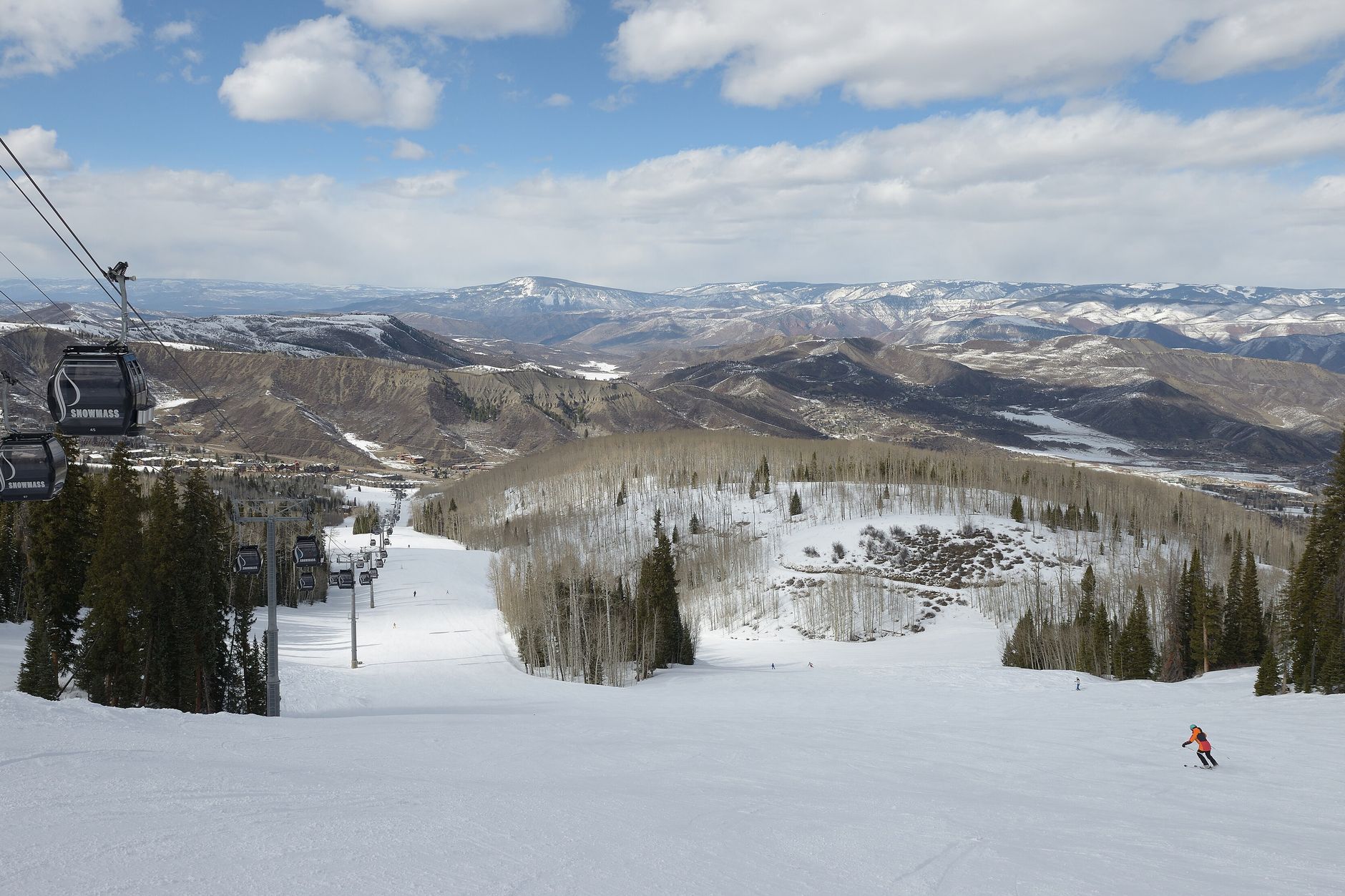
Snowmass Village
A purpose-built mountain village with ski-in, ski-out access and a quieter pace.

Roaring Fork Valley Guide
Photo by Rhododendrites, CC BY-SA 4.0, via Wikimedia Commons
Quick answer
Aspen is a historic former silver mining town in Pitkin County, Colorado, at the top of the Roaring Fork Valley. It has four ski mountains on one lift ticket, a full-time community of fewer than 8,000 residents, and free-market housing among the most expensive in the United States.
My family has been in the Roaring Fork Valley since the late 1970s, and Aspen itself has been my home for every one of my 11+ years here; I live at The Gant, a few blocks from the gondola. So let me start with the thing most guides won’t tell you, written from inside the town rather than about it: Aspen is a spectacular place to live and a complicated place to live, usually in the same week. If you’re thinking about moving to Aspen or buying here, you deserve the honest version from someone who walks these streets every day. This is it.
Aspen sits at roughly 7,900 feet in Pitkin County, at the top of the Roaring Fork Valley, about 200 miles west of Denver. It’s a town of fewer than 8,000 full-time residents that swells to many times that during ski season and the summer festival calendar. Four ski mountains operate under one lift ticket: Aspen Mountain (locals say Ajax) rising straight out of downtown, Aspen Highlands, Buttermilk, and Snowmass. The town began as an 1880s silver mining camp, and the Victorian bones of that era still define the West End.
What makes Aspen genuinely unusual isn’t the skiing. It’s that a town this small carries the cultural calendar of a city: the Aspen Music Festival all summer, the Aspen Institute’s year-round programming, Food & Wine Classic in June, X Games at Buttermilk in winter, and a restaurant scene that has no business existing at this altitude.
Aspen runs on a rhythm that takes newcomers about a year to understand. I’ll describe it as someone who lives it, not someone who read about it.
Winter is the show: the town is full, the energy is high, restaurants are booked, and if you work in real estate, hospitality, or just about anything else, you’re working. Summer is the local’s secret; many people who live here will tell you July is better than January, with the Music Festival, the Maroon Bells at sunrise, and trail access in every direction. Offseason (roughly mid-April through May, and again late October into November) is when Aspen exhales. Half the restaurants close for weeks, the town gets quiet, and locals either leave for somewhere warm or savor having the place to themselves. If you need constant stimulation, offseason will test you. If you’ve been running hard for six months, it’s the reset that makes the lifestyle sustainable.
The honest tradeoffs: housing costs that lead the nation, a labor market where nearly every business struggles to staff, winter driving and a high-altitude climate that aren’t for everyone, and the strange social math of a small town where your neighbor might be a fourth-generation rancher or a Fortune 500 founder. Most people who stay decide the access (to terrain, to culture, to a genuinely tight community under the glitz) outweighs all of it.
“Aspen” on a listing portal covers wildly different places. Here’s how the town actually breaks down.
Downtown Aspen: the historic grid between the gondola and Main Street. Condos and a small number of single-family homes, walk-everywhere living, and the highest price per square foot in town. The Core is for people who want to step out the door into the middle of everything, and who accept that “everything” includes festival crowds and Saturday night noise.
The postcard neighborhood: tree-lined streets of restored Victorians and contemporary infill west of the Core, walking distance to the Music Tent and Aspen Institute campus. Quieter than the Core, deeply historic, and perennially in demand. Many homes here trade rarely and privately; if the West End is your target, you want an agent watching it daily.
This one is personal: the East End is my neighborhood. East of the Core along the Roaring Fork River toward Independence Pass, it’s a mix of condos, townhomes, and single-family homes, generally calmer than the Core with quick access to both downtown and the North Star Nature Preserve, and it catches beautiful late light off Aspen Mountain. I live at The Gant, which means I know Aspen condo ownership from the inside: what HOA dues actually buy, how rental programs really perform, what walk-to-gondola living is worth in February and what it’s worth in May. That firsthand knowledge is exactly what most Aspen condo buyers are missing when they evaluate a listing, and I’m happy to lend it.
The slope rising north of town, often called Billionaire Mountain for a reason. Large contemporary homes with the definitive view of Aspen Mountain and the town below. This is trophy territory, with prices to match, and a different ownership profile: many homes here are second (or fourth) residences.
Northeast of downtown near the Smuggler Mine and the beloved Smuggler Mountain Road trail. A genuine mix: townhomes, mobile home parks that represent some of Aspen’s last attainable ownership, and single-family homes. More year-round residents per block than most of town.
West of the roundabout along Castle Creek and toward the golf course. Larger lots, a more residential feel, and proximity to the Aspen Recreation Center and schools campus. This is where a lot of Aspen’s working professional ownership lives.
Technically outside Aspen proper, but part of any honest Aspen housing conversation: ranch parcels and homes on the mesa with big views and a 10-15 minute drive to the Core. Woody Creek keeps its own stubborn, wonderful identity (and tavern).
I’ll keep this section evergreen and put the live numbers where they belong: in a snapshot I update from MLS data, not from memory.
Market snapshot
As of . Source: Aspen/Glenwood Springs MLS (AGMLS)
All information deemed reliable but not guaranteed. Listings information obtained through IDX (Internet Data Exchange). Information being provided is for personal, noncommercial use and may not be used for any purpose other than to identify prospective properties for purchasing. © Copyright 2026 by Aspen/Glenwood Springs MLS, Inc. ALL RIGHTS RESERVED WORLDWIDE. No part of this publication may be reproduced, adapted, translated, stored in a retrieval system or transmitted in any form or by any means, electronic, mechanical, photocopying, recording, or otherwise, without the prior written consent of the Aspen/Glenwood Springs MLS, Inc.
What stays true across cycles: Aspen is a supply-constrained market in the most literal sense. The town is hemmed in by national forest, wilderness, and some of the most growth-restrictive land use policy in Colorado. New inventory is mostly redevelopment, not expansion. That scarcity is the engine under long-term values, and it’s also why timing and preparation matter more here than in markets with normal supply. Well-priced properties in desirable pockets can move fast in any season; aspirationally priced ones can sit for a year. Knowing which is which is the job.
One more local reality worth understanding before you buy: short-term rental rules in Aspen are permit-based, actively debated, and they change. If any part of your purchase math involves rental income, verify the current permit landscape for that specific property and zone before you write an offer, not after. (This is exactly the kind of change my daily market briefs track.)
You can’t understand Aspen housing without understanding APCHA, the Aspen Pitkin County Housing Authority. It’s one of the oldest and largest resident-housing programs in any American resort town: thousands of deed-restricted units, from rentals to ownership, allocated by lottery with employment and (for most categories) income and asset requirements.
For working locals, APCHA is often the realistic path to ownership in the upper valley, and the lottery system rewards people who understand how categories, priority, and bidding actually work. I’ve been through this process personally, and my honest advice is: if you work in Pitkin County, learn the system early, get your qualifications in order, and bid when eligible, because entering costs you nothing and winning changes everything.
Beyond housing, expect a premium on nearly everything: groceries, dining, services, childcare, trades. Two locally significant offsets: property taxes in Colorado are low relative to coastal states, and RFTA (the valley’s public transit system) is genuinely excellent, with free in-town service and valley-wide routes that let plenty of people live car-light. Many households also solve the math the valley way: live down-valley in Basalt, Carbondale, Glenwood Springs, or New Castle, where dollars go meaningfully further, and commute up. I’ve written honest guides to each: Living in Snowmass Village · Living in Basalt · Living in Carbondale · Living in Glenwood Springs · Living in New Castle.
Aspen/Pitkin County Airport (ASE) sits three miles from downtown with direct service to major hubs that expands seasonally; it’s one of the few resort towns where “land at 11, ski at 1” is literal. By road, Denver is roughly 3.5 to 4 hours via I-70 and Glenwood Springs. Independence Pass, the spectacular back route over the Continental Divide, closes every winter, a detail that surprises newcomers and shapes summer road-trip habits. Within town, you barely need a car: the Core is walkable, and free buses connect the neighborhoods and the four mountains.
Aspen School District serves the town and surrounding area from a single campus on Maroon Creek Road, with public elementary, middle, and high schools, alongside a handful of independent options in the valley. Families relocating here should visit the campus and talk to the district directly; I’m glad to make introductions, and school decisions deserve firsthand research rather than internet rankings.
The four mountains get the headlines, but the living happens in the rest of it: the Maroon Bells (the most photographed peaks in North America, a 20 minute drive or summer shuttle away), hundreds of miles of trail out of town in every direction, the Rio Grande Trail running car-free down the whole valley, gold-medal fishing on the Roaring Fork and Fryingpan, the Music Festival’s student recitals in the summer, Theatre Aspen, the Wheeler Opera House, and an offseason community calendar that’s where you actually meet the town.
Aspen golf is a two-course story, and the two courses tell you a lot about how the town works.
Aspen Golf Club is the municipal course, and calling it a “muni” undersells it badly: an 18-hole championship layout just west of town off Highway 82, regularly ranked among the best municipal courses in the country, with a full practice academy and a restaurant patio aimed at the mountains. It’s public, it’s a genuine value by upper-valley standards, and in winter the fairways become the Aspen Cross Country Center’s groomed Nordic trails, which might be the most Aspen fact in this entire guide. Homes around the golf course and Cemetery Lane area put this amenity literally out the back door.
Maroon Creek Club is the other end of the spectrum: a private Tom Fazio design from 1996, three miles west of town near Buttermilk, routed through aspen groves and along Maroon Creek with views of two ski areas. It’s consistently ranked among the top handful of courses in Colorado, and membership is among the most coveted in resort golf. For buyers, Maroon Creek is also a real estate conversation: the club’s homes and homesites, with their combination of Fazio golf, Tiehack ski access, and proximity to town, sit firmly in Aspen’s trophy tier, and opportunities there are scarce and quietly traded. If a golf-and-ski lifestyle at the highest level is the brief, this is where that conversation starts, and it’s a conversation worth having with someone who watches the market daily.
The most useful framing I can offer relocating buyers: Aspen is the top of a 40-mile valley, and the right answer for many people is somewhere along it. Aspen maximizes proximity and prestige at maximum cost. Snowmass Village trades nightlife for ski-in convenience and (relative) value. Basalt is the fly-fishing midpoint with two rivers and a fraction of the price. Carbondale is the valley’s arts-and-ranching soul under Mount Sopris. Glenwood Springs is the working hub with hot springs and I-70 access. New Castle is where the valley’s value still lives. The honest move is deciding what you’re actually optimizing for, then picking the spot on the valley floor that matches. That conversation is most of my job, and I’m happy to have it with you.
Quick answers
Yes, for the right person. Roughly 7,000-8,000 people do it full time and most are fiercely loyal to the lifestyle: world-class recreation, a packed cultural calendar, and a real small-town community underneath the resort. The tradeoffs are housing cost, offseason quiet, and high-altitude living. People who thrive here tend to be outdoors-oriented and comfortable with seasonal rhythm.
Free-market housing in Aspen is among the most expensive in the United States, whether renting or buying, and daily costs run well above national norms. The realistic paths are: substantial resources, qualifying for APCHA deed-restricted housing as a local worker, or living down-valley and commuting. Current pricing changes constantly; the market snapshot above is updated daily from MLS data, and I can pull live numbers for any specific property type the day you ask.
Both are true. A meaningful share of Aspen's housing stock is second homes, and there is also a real year-round community, anchored heavily by APCHA housing, the school district, and the people who run the town's businesses and institutions. I'm one of the year-rounders, and I can tell you the full-time town is smaller, tighter, and warmer than the resort's reputation suggests. Which Aspen you experience depends a lot on which neighborhood and which season.
Two separate towns, eight miles apart, one lift ticket. Aspen is the historic town with the dining, nightlife, and cultural institutions; Snowmass is the purpose-built resort village with the biggest ski mountain, true ski-in/ski-out housing, and a quieter pace. Full comparison here: Living in Snowmass Village.
The honest answer: when the right property appears, because supply is so constrained that waiting for a season can mean waiting out the property. That said, list-price strategy, seasonal inventory patterns, and regulation changes all create moments of leverage, which is precisely what I track daily. If you tell me what you're looking for, I'll tell you when your moment shows up.
From the journal
Compare the valley
A purpose-built mountain village with ski-in, ski-out access and a quieter pace.
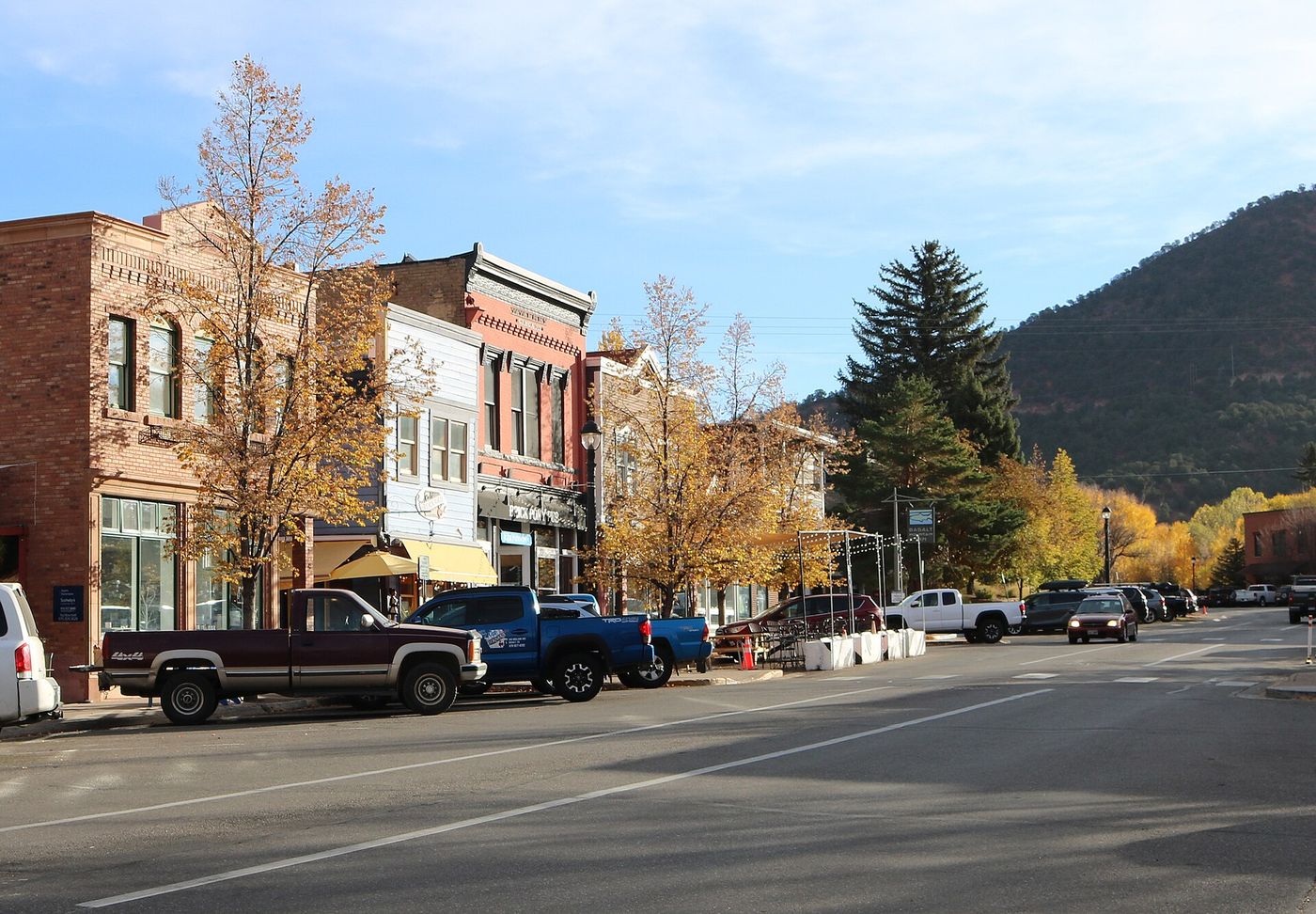
Two Gold Medal rivers, a walkable old town and the shortest commute to Aspen.

An arts and ranching town beneath Mount Sopris, with a lively Main Street.
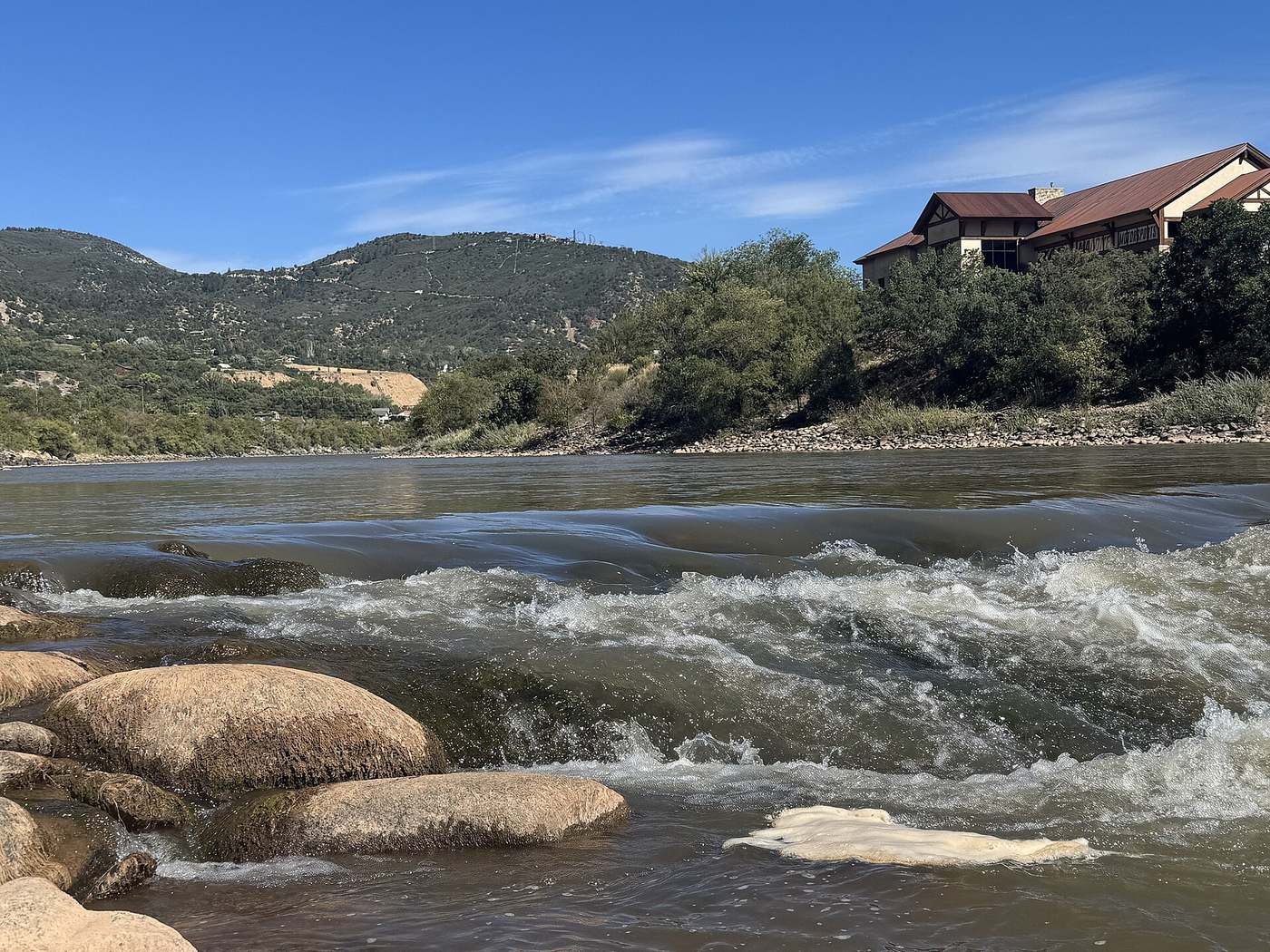
The valley's working hub, with hot springs, a hospital and I-70 access.

A former coal town on the Colorado River with newer homes and a golf community.
Ready when you are
I don’t just work this market, I live in it, year-round, a few blocks from the gondola. Aspen and Snowmass Village are the markets I watch closest of all: live MLS data daily, neighborhood by neighborhood. I write a daily brief on it too: live MLS data, regulation changes, and the local decisions that move it. If you’re buying, selling, or just deciding whether the valley is your place, reach out and I’ll give you the honest version, the same one you just read, over coffee in the town we’re talking about.
Samuel Pickus is an Aspen real estate agent and Managing Broker of The Aspen Realtor LLC, helping buyers and sellers in Aspen, Snowmass Village, and beyond. Request a free home valuation built from local comps.
970-404-9542
sam.pickus@theaspenrealtor.com
CO License #100092960Resort & Second-Home Property Specialist (RSPS)
All information deemed reliable but not guaranteed. Listings information obtained through IDX (Internet Data Exchange). Information being provided is for personal, noncommercial use and may not be used for any purpose other than to identify prospective properties for purchasing.
© Copyright 2026 by Aspen/Glenwood Springs MLS, Inc. ALL RIGHTS RESERVED WORLDWIDE. No part of this publication may be reproduced, adapted, translated, stored in a retrieval system or transmitted in any form or by any means, electronic, mechanical, photocopying, recording, or otherwise, without the prior written consent of the Aspen/Glenwood Springs MLS, Inc.
Terms of Service & Privacy Policy | Cookie Policy | Cookie Preferences | Property Listings | Sitemap | Accessibility | Photo Credits
© Copyright 2026 The Aspen Realtor LLC. All Rights Reserved. CO License #100092960.
The Aspen Realtor LLC is committed to the letter and spirit of the U.S. policy for achieving equal housing opportunity. We do not discriminate on the basis of race, color, religion, sex, handicap, familial status, national origin, or any other protected class under Colorado law.