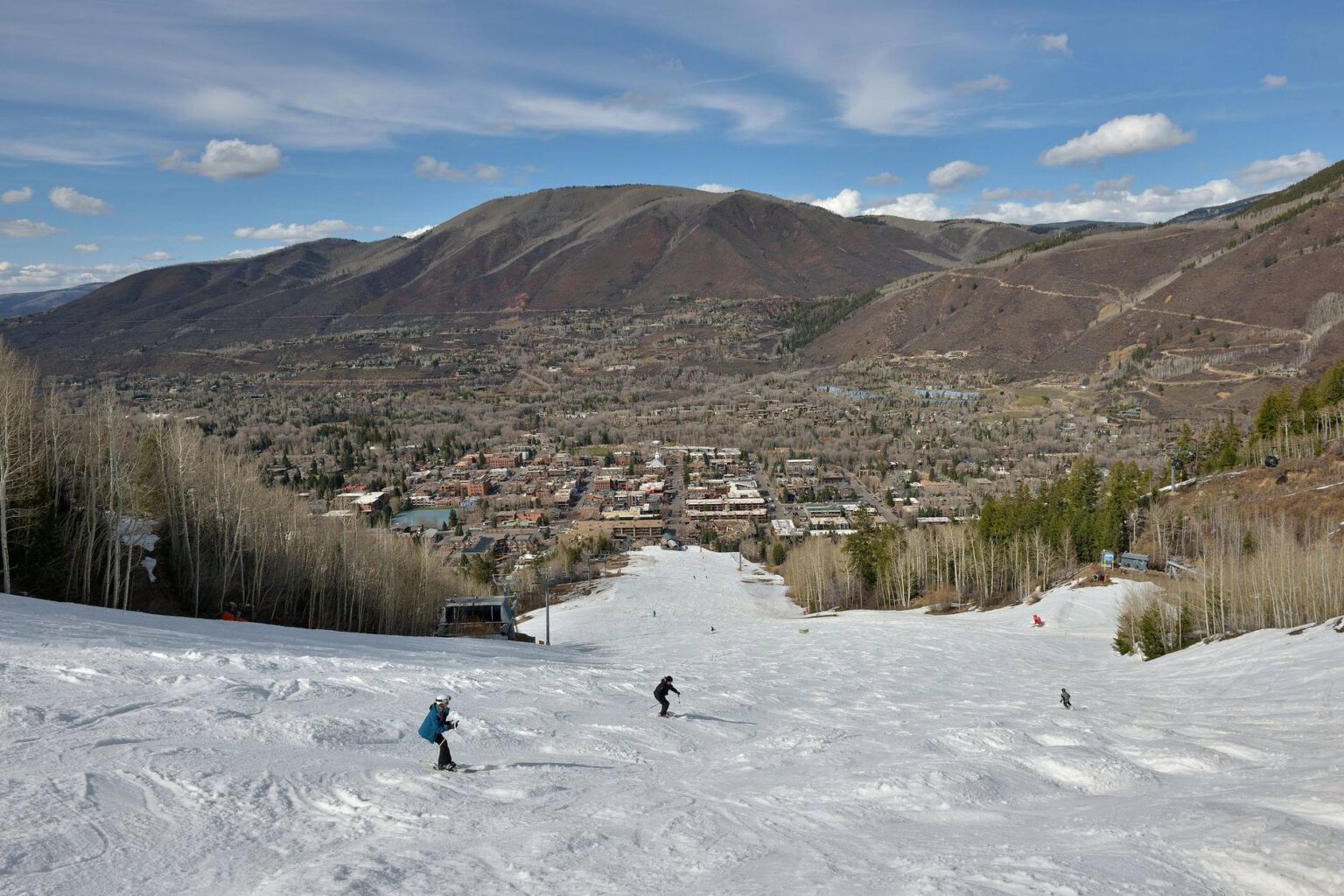
Walk west on Main Street, cross Monarch, and turn north. Within a block the ground goes flat, mature cottonwoods close over the street, and you are standing in the district where west end aspen real estate lives: Aspen’s historic residential grid between downtown and the Roaring Fork River.
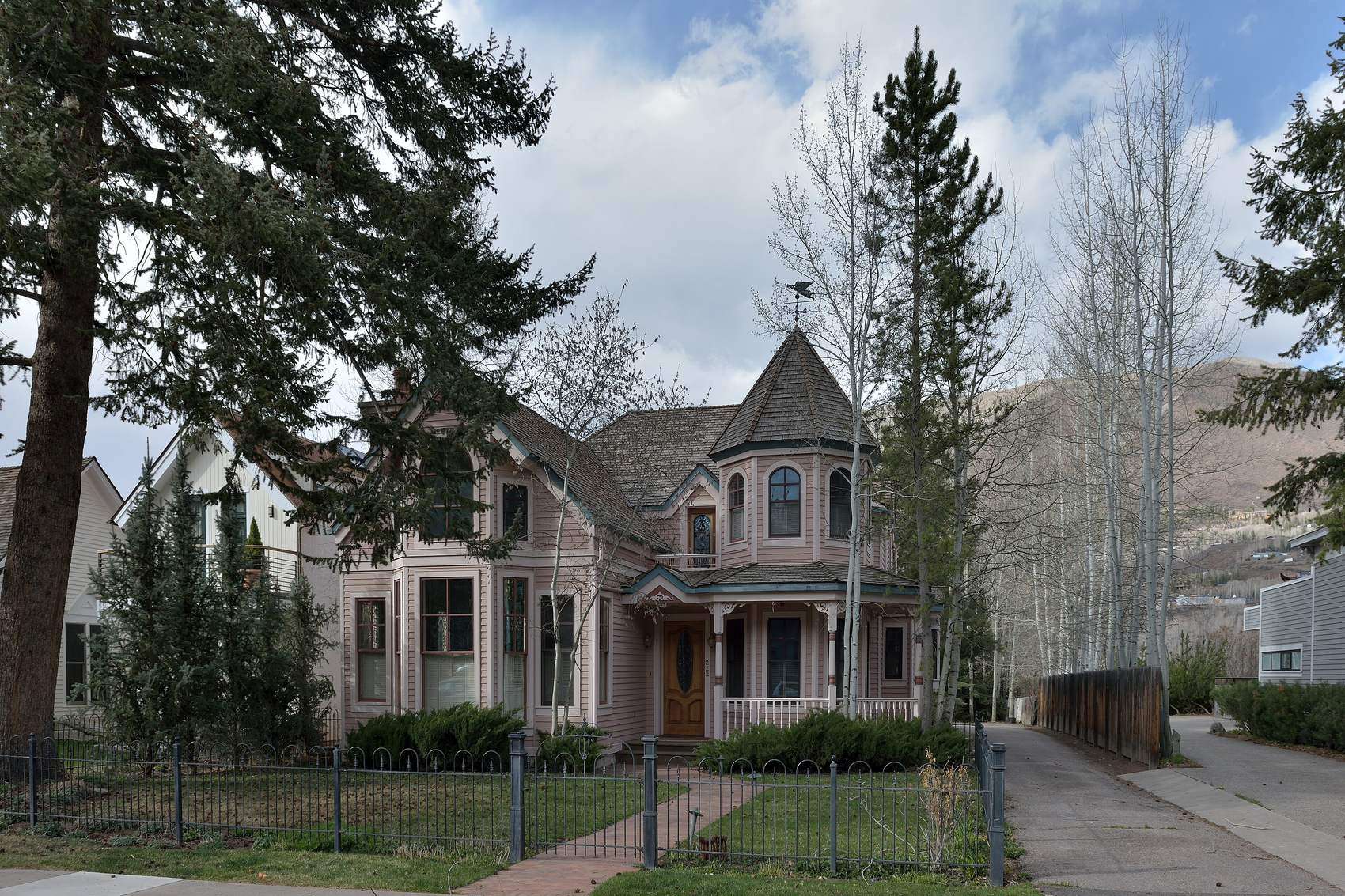
The flat part matters more than most people expect. This is the piece of town you can actually walk and bike year round without climbing a hillside, and that one fact is why some buyers pick these blocks instead of a slopeside condo or a hillside estate.
The flat grid west of Monarch Street
The neighborhood runs roughly west of Monarch Street and north of Main Street, out toward the river. The streets are quiet and residential, and the west side of the grid carries the summer festival foot traffic. The Rio Grande Trail runs along the river on the north edge and connects both to downtown and down valley.
The housing stock is the headline. Victorian-era miner’s cottages and larger Victorians sit next to modern rebuilds, which means two houses on the same block can be worlds apart in condition, size, and what can legally be done to them. If you remember one sentence from this guide, make it that one.
The walk from the Music Tent to Hallam Lake
From most of the neighborhood you can walk to the Aspen Institute campus, the music tent and Harris Concert Hall, and Hallam Lake. That short walk is the whole argument for buying here.
Hallam Lake is a 25 acre nature preserve with a half mile loop through wetlands and meadows, open to the public year round and run by ACES, on land donated in 1968 by Elizabeth Paepcke. One note for reading listings: the main venue is now officially the Michael Klein Music Tent, with the Benedict Entrance as the main entrance. If an older guide or an old listing says Benedict Music Tent, that is the same building.
Aspen Meadows: 40 acres at the end of the street
Here is the thing locals know and buyers almost never realize is sitting at the end of their street. The Aspen Institute’s Aspen Meadows campus is 40 acres designed by Herbert Bayer between 1953 and 1973, with outdoor earthworks and sculpture you can walk straight through. The Resnick Center for Herbert Bayer Studies is free and open to the public Tuesday through Saturday, noon to 5 p.m.
Living in the West End Aspen: July versus February
The Aspen Music Festival and School’s 2026 season ran July 1 to August 23, and concerts can be heard for free from the David Karetsky Music Lawn and the Kaye Music Garden just outside the tent, per the Aspen Music Festival and School. Owning on the west blocks in July means music carries across the neighborhood most evenings. Some buyers call that the reason they bought. Others want to hear it once before they decide.
February is a different neighborhood on the same grid: quiet streets, no festival foot traffic, and the same flat walk to town. That is why I tell buyers to see a block twice if they can, or at least to be honest with themselves about which season they are buying for.
The ped-bikeways and the West End sneak
There is a real traffic story here, and it shows up at 5 p.m. City Engineer Tricia Aragon told council that about 30 percent of traffic leaving town during peak hours goes through the West End, using West Smuggler to reach Power Plant Road, the pattern locals call the West End sneak, according to Aspen Daily News reporting.
The city has been building a walking and biking network inside the grid in response. The Hallam Street ped-bikeway, the Hopkins Street ped-bikeway and the Fourth Street pedway run east to west, and Lake Avenue was permanently designated a north to south pedestrian and bikeway where vehicles may not travel more than one block, as The Aspen Times reported. Living on a ped-bikeway block changes the feel of the street and the way you drive to your own front door.
Before you write an offer, I would walk the block and check:
- How the street behaves at 5 p.m. in summer, not just at 11 a.m. on a showing
- Whether the block is on a ped-bikeway and how you would reach the house by car
- Where festival foot traffic passes in July
- Whether the parcel is individually designated or inside a historic district
- Whether unbuilt floor area or a transferable development right is part of the story
Parking permits and the 72 hour rule
On-street parking is regulated. Aspen’s Residential Permit Parking program limits on-street parking in residential zones, qualifying addresses may obtain up to three residential permits plus one guest permit, and every vehicle has to be moved within 72 hours even with a permit, per the City of Aspen. If you are used to leaving a second car parked on the street all season, plan differently.
Aspen historic Victorian homes and the rules attached to them
Aspen has run a preservation program since the early 1970s, after a citizen group called Save the Victorians pushed council to adopt one of the country’s earliest preservation ordinances in 1972. That is why this neighborhood still reads as a historic grid instead of a district rebuilt all at once. Aspen Daily News has reported that about 300 of roughly 2,000 Aspen properties, near 15 percent, are designated historic, including about 30 classified as Aspen Modern.
Properties that are individually designated or inside a historic district are subject to design standards, and the Historic Preservation Commission reviews development, demolition, relocation and variations, per the City of Aspen Planner of the Day FAQ. Not every West End parcel is regulated the same way. Status has to be checked parcel by parcel on the city’s Planning and Zoning map, which is a showing-day question, not a closing surprise.
Unbuilt floor area and transferable development rights
Aspen’s program also offers owner-side incentives, not only restrictions. A Transferable Development Right lets certain properties sever and convey undeveloped floor area to be built on a different property in the city. For a seller, unbuilt floor area and TDR eligibility can be part of the value story. For a buyer, it is a question to answer before the offer. If you want a starting list, browse current Aspen homes for sale and send me the two or three that interest you.
What west end aspen real estate looks like in the market right now
Aspen-wide, there are 184 active residential listings with a median list price of $9,199,000 and median days on market of 99, and 25 closed residential sales in the last 30 days at a median sold price of $7,200,000, according to AGMLS data via Spark as of today. Those are town numbers, not West End numbers, but they tell you the pace: inventory sits, and pricing is decided house by house.
That gap between list and sold is exactly why condition and designation status matter so much on this grid. You can also search the whole valley on a map or read more Aspen neighborhood guides before you narrow anything down.
Frequently asked questions about west end aspen real estate
Is the West End a good place to buy in Aspen?
It depends on what you want from a Tuesday. If a flat, walkable grid with access to the Institute campus, the music tent and Hallam Lake is the point, this is the neighborhood that delivers it. If you want quiet in July or an unregulated remodel, other parts of town may fit better.
Can you remodel a historic home in Aspen’s West End?
Often yes, but the process depends on the parcel. Individually designated properties and those inside a historic district are subject to design standards, with the Historic Preservation Commission reviewing development, demolition, relocation and variations. Designation is parcel by parcel, so check status before you plan a project.
How far is the West End from downtown Aspen?
Most of the neighborhood is a short, flat walk from downtown, which is the core reason buyers choose it. The grid sits just west of Monarch Street and north of Main Street, and the city’s ped-bikeway network makes walking and biking into town easier than driving on many blocks.
Let’s walk the West End before you decide
If you are weighing a purchase here, I will pull the parcel picture first: designation status, whether unbuilt floor area or a TDR question exists, and what the block does at 5 p.m. in July versus February. If you are weighing a sale, those same details are part of your price story.
Send me your must-haves and I will tell you what is realistic, or talk through a specific West End parcel with me and we will set a time to walk these streets together.
One email from me every Saturday
The Aspen and Snowmass Village numbers for the week, what I am seeing on the ground, and one thing worth doing. No spam, and you can unsubscribe any time.
Photo: “Aspen Victorian style house Hallam Street 3” by Wolfgang Moroder, Wikimedia Commons, CC BY-SA 3.0.